Blog and news (uk)
API Gateways in Government Systems: Control and Request Routing
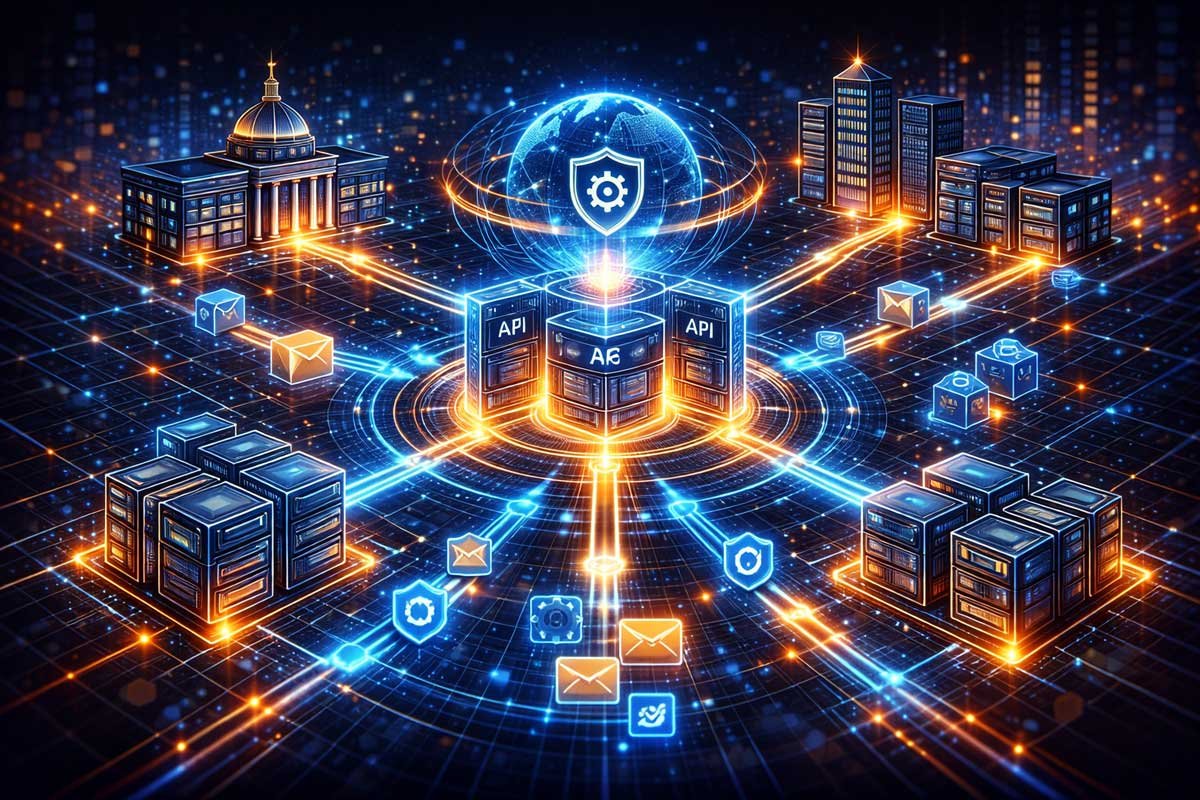
The development of electronic services and the increasing number of integrations between state registers necessitated the streamlining of access mechanisms to the application functions of systems. After the phase of rapid connection of individual services, the task of centralized request control and standardization of their routing became relevant.
This analytical material summarizes the experience of implementing API gateways in state information systems. It examines approaches to building an integration circuit, authorization and logging mechanisms, and ensuring the stability of data exchange between agencies.
The Role of API Gateway in the Architecture of Government Systems
In 2016, the API gateway is considered a central point for routing and controlling external and internal requests to application services. It ensures the isolation of the internal infrastructure from direct access and forms a single regulated interaction interface.
IQusion implements API gateways within a service-oriented architecture (SOA), where each service is published through a standardized interface. This allows for scaling functionality without making changes to the system’s core.
Request routing is carried out according to defined access and load policies. The API gateway ensures traffic balancing between server clusters and supports fault tolerance in case of individual node failures.
Access Control and Exchange Security
Under increased security requirements, API gateways are implemented with mandatory authentication and authorization for each request. Access is granted according to the roles and permissions of users or information systems.
IQusion integrates communication channel encryption mechanisms, request logging, and administrator action auditing within the integration circuit. All operations are logged with the possibility of further analysis and reporting.
Network segmentation and access zone demarcation allow limiting interaction between systems exclusively through the API gateway. This minimizes the risk of unauthorized access to databases and critical services.
Regulation and Operational Discipline
After the active phase of the conflict and considering the experience of 2014–2015, government customers pay special attention to formalizing procedures for connecting new services to the integration environment. Each new API undergoes testing, compliance verification with standards, and approval by responsible departments.
IQusion provides centralized monitoring of API gateway load, performance analysis, and routing parameter control. This allows for forecasting resource expansion needs and planning modernization without interrupting system operations.
The integration of API gateways with corporate analytical modules creates an additional management layer, allowing for the evaluation of interdepartmental exchange efficiency and the identification of potential bottlenecks.
Stability and Further Scaling
The use of API gateways in 2016 becomes the basis for controlled scaling of state information systems. A single access point simplifies the integration of new services and maintains the architectural integrity of the platform.
IQusion views the API gateway as a tool for long-term manageability of the integration environment. Regulated update procedures, auditing, and centralized routing control form a predictable operational model.
In conclusion, the implementation of API gateways ensures transparent request control, enhances data exchange security, and creates a foundation for further integration of government services within a single standardized infrastructure.