Blog and news (uk)
Component Software Model: Dependency Control and Managed Updates
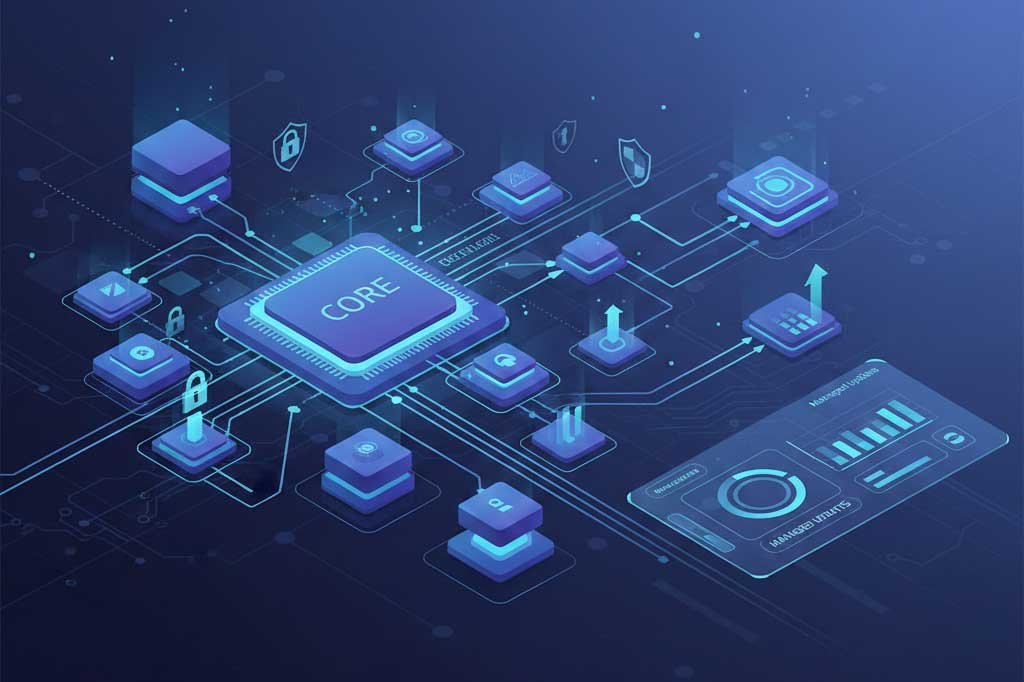
With the increasing complexity of state information systems, the issue of managing software components became one of the key challenges in 2016. After the rapid deployment phase of individual modules, there arose a need for an ordered model of dependency management and a regulated update process.
This analytical publication summarizes the experience of implementing a component software model in the public sector. It examines approaches to module isolation, version control, integration via standardized interfaces, and ensuring stable industrial operation.
Architectural Principles of Component-Based Construction
In 2016, software systems were increasingly designed as a set of separate components with clearly defined functions and interfaces. Each module performs a specific role and interacts with others via integration platforms or API gateways.
IQusion IT LLC, in its projects, forms a catalog of components defining their dependencies, versions, and configuration parameters. This approach minimizes the risk of conflicts during updates and preserves the architectural integrity of the system.
Service-Oriented Architecture (SOA) supports the isolation of application logic, simplifying the replacement or modernization of individual components without a complete rebuilding of the entire platform.
Dependency and Version Control
In scalable systems, managing dependencies between modules becomes particularly important. In 2016, regulations were introduced for version fixation, compatibility checks, and testing before deploying updates in a production environment.
IQusion implements centralized configuration management, allowing tracking of interconnections between components, databases, and integration services. All changes are recorded in logs with audit capabilities.
Clustering of server solutions and the use of test environments ensure the safe implementation of new versions with minimal risk to service availability.
Regulated Updates and Operation
After the active phase of conflict and considering the experience of 2014–2015, government customers pay special attention to the predictability of changes. Component updates are carried out according to approved procedures, with backup and planned testing.
IQusion IT LLC implements centralized monitoring of component status after updates, allowing for prompt detection of deviations and adjustment of configuration parameters. Logging of administrator actions ensures process transparency.
Network segmentation and access control to deployment environments minimize the risk of unauthorized changes and ensure compliance with the customer’s internal regulations.
Long-Term Stability and Scaling
The component software model in 2016 became the basis for controlled scaling of state systems. Module isolation and standardized interfaces allow for gradual expansion of functionality without disrupting the operation of existing services.
IQusion views dependency and version management as a tool for architectural discipline, supporting stability in environments with high demands for availability and security.
In summary, the component software model with controlled dependency management and regulated updates forms a predictable operational model, reduces operational risks, and creates a basis for further integration and development of state information systems.