
Cyber Threats 2026: New Threats and Countermeasures
Modern military conflicts have definitively institutionalized cyberspace as a distinct domain of operations, comparable to land, sea, air, and space. This is enshrined in the military doctrines of leading states and alliances.…
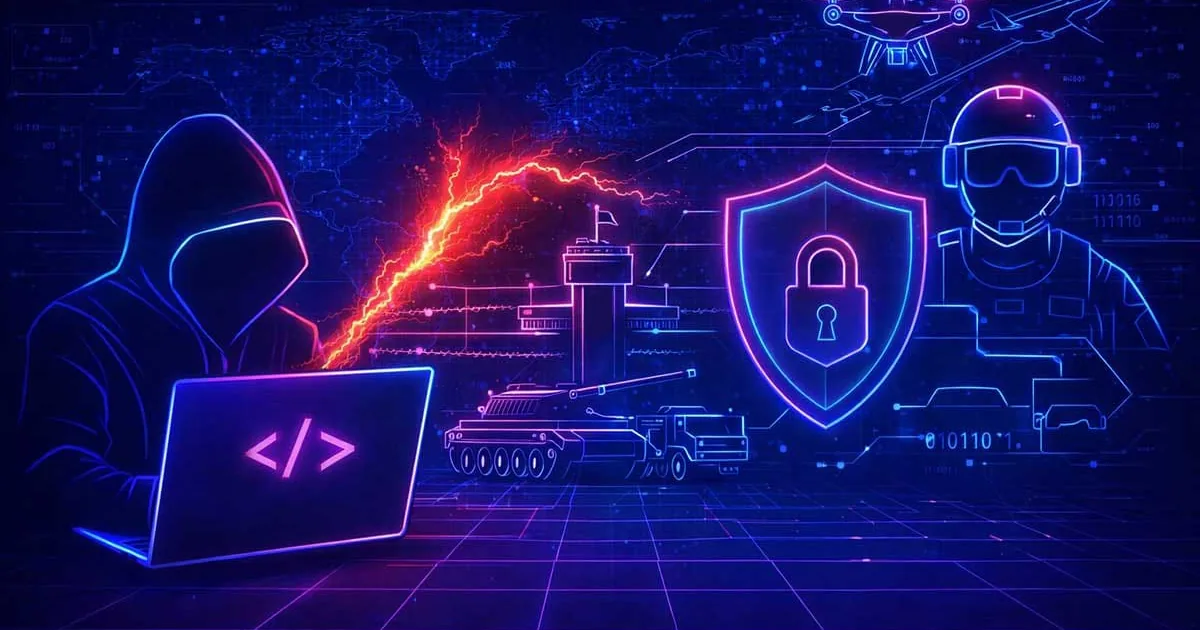
Modern military conflicts have definitively institutionalized cyberspace as a distinct domain of operations, comparable to land, sea, air, and space. This is enshrined in the military doctrines of leading states and alliances. At the same time, the nature of confrontation has also changed: cyberattacks are no longer exclusively a tool for espionage or criminal gain, but have acquired the characteristics of systemic influence on management, infrastructure, and data trust.
In this reality, the role of a system integrator like IQusion is not just to implement technical means, but to form managed digital resilience for state and commercial structures.
Changing Attack Motivation: From Profit to Destabilization
In peacetime, the vast majority of cyberattacks were aimed at economic gain — data theft, encryption with ransom demands, financial fraud. War has shifted the focus: alongside financial attacks, the share of operations with strategic goals has sharply increased.
This refers to:
- disruption of management processes;
- degradation or cessation of services;
- destruction of data integrity;
- discrediting information systems as such.
To counter such threats, IQusion focuses not only on technical protection but also on the development and implementation of Security Policies — formalized rules and procedures for managing information assets. These policies define how a system should behave under pressure, not just in normal operation.
The Perimeter is No Longer the Main Line of Defense
The classic ‘perimeter defense’ model — firewalls, isolated segments, access control — remains an important security element but can no longer be considered its foundation. Modern attacks are prolonged, multi-phased, and often involve the presence of an attacker inside the system long before an incident is detected.
Therefore, information systems must be designed with the assumption that:
- compromise of individual nodes is inevitable;
- user or administrator error is a realistic scenario;
- protection must be focused on resources, access, and processes, not just network boundaries.
In such a model, verifying the system’s actual resilience plays a key role.
Penetration Tests as a Tool for Survivability Verification
Regular penetration tests (pentests) and simulated attack scenarios allow for assessing the actual, not just declared, level of security.
Pentest practices applied by IQusion enable:
- identifying architectural and configuration vulnerabilities;
- verifying the effectiveness of access controls;
- assessing the readiness of incident response processes;
- identifying risk points related to organizational procedures and personnel actions.
This is not about a formal ‘checkbox,’ but about verifying how the system behaves in a scenario as close as possible to a real attack.
КСЗІ as a Foundation for Critical Systems
In wartime conditions, information protection moves from the category of recommendations to the realm of regulatory and operational requirements, especially for state information and communication systems and critical infrastructure.
The creation of Complex Information Protection Systems (КСЗІ) is the basis for:
- processing restricted access information;
- ensuring process manageability;
- passing state expertise and putting the system into operation.
IQusion provides a full cycle of organizational and engineering-technical measures aimed at protecting information from leakage, disclosure, and unauthorized access. This is not about formal compliance, but about creating a viable environment for data.
Operational Pressure and Partner Legitimacy
Wartime conditions create constant operational pressure: limited resources, personnel losses, attacks, infrastructure disruptions. In such circumstances, not only technological capability but also the legitimacy and reliability of the integrator become critical.
Reliability and security with IQusion are based on a solid foundation:
- State Licenses: Possession of all necessary licenses for providing technical and cryptographic information protection services.
- State Secret: Permission to conduct activities related to state secrets, allowing work with the most sensitive sectors of defense and public administration.
Cyber Resilience as a Property of Processes
The main conclusion is that cyber resilience is not a separate product or module that can be purchased. It is a systemic property of an organization, formed through:
- access and identity management;
- data protection and backup;
- incident monitoring and response;
- regular audits and testing;
- personnel training and established crisis response procedures.
The transition from a ‘threat protection’ model to a ‘resilience under constant pressure’ model is a key condition for maintaining manageability and digital sovereignty. IQusion IT LLC acts not as a provider of individual solutions, but as a strategic partner, ensuring a full cycle of protection in conditions of hybrid warfare — from regulatory frameworks to complex engineering systems.
Related materials
 Digital Transformation
Rapid Adaptation Without Stress: How HR Systems and Digital Regulations Overcome Staff Instability
This year, the Ukrainian labor market has definitively entered a phase of 'structural storm'. The demographic…
 Cybersecurity
Transparency as a Strategic Asset: Managerial Control Architecture from IQusion
This year, managing an organization can no longer be built on intuition or the personal experience…
 Digital Transformation
Digital Transformation of Government Processes: How Megapolis.DocNet Increases Efficiency
The efficiency of a government institution largely depends on how quickly it processes documents. Documents record…