Blog and news (uk)
Cybersecurity of State Systems in 2017: From the Illusion of the Perimeter to Security by Design Architecture
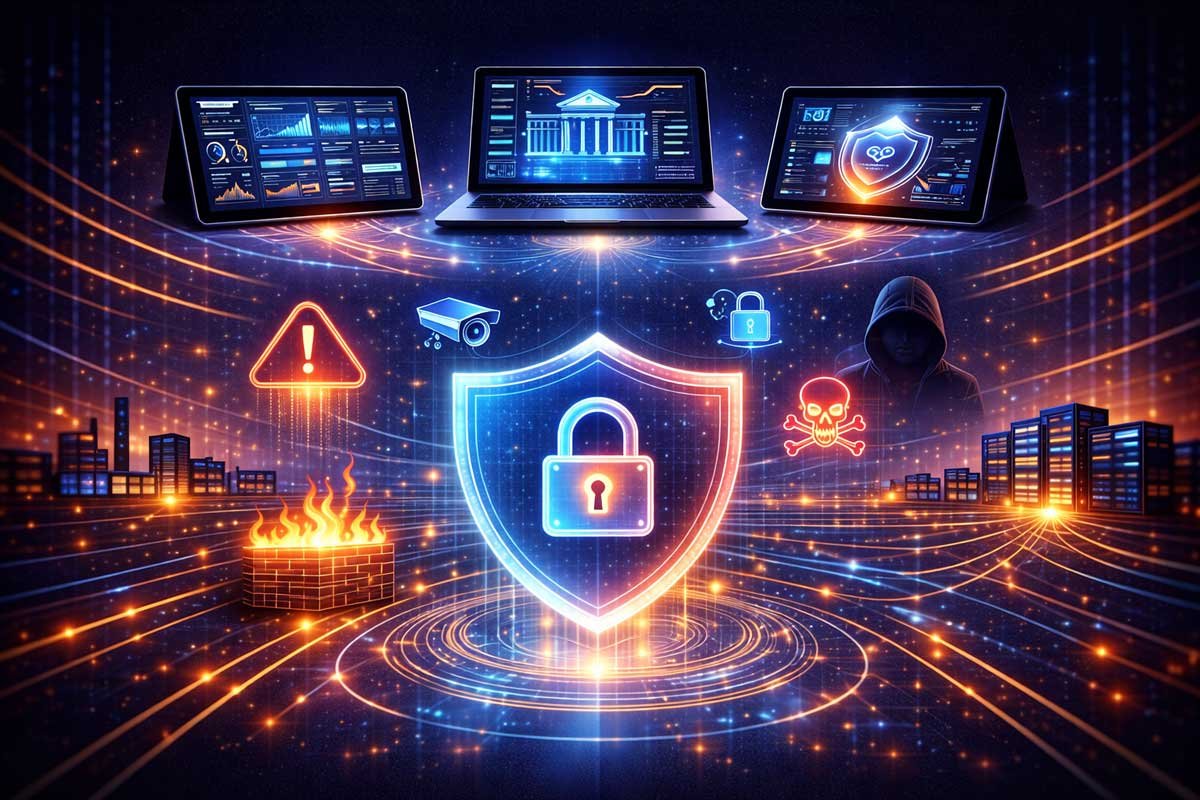
2017 was a turning point for public sector cybersecurity. Mass attacks by wiper-malware, targeted APT attacks on the energy and financial sectors proved: the era when antivirus and a closed network perimeter were sufficient to protect a registry is irrevocably over. Today, the security of a state IT solution is not a technical option, but a matter of national resilience.
The digitalization of administrative services and the consolidation of disparate databases create a colossal attack surface. Open API gateways, web portals for citizens, hundreds of new integrations between agencies – all these are potential vectors of intrusion. In such realities, the team of IQusion IT LLC rejects “bolt-on” security. We implement the concept of Security by Design: protection mechanisms are laid down at the architecture design stage, not after the code is written.
Current Threat Landscape: Where to Expect an Attack
Government information systems are currently facing not just hooliganistic DDoS attacks (although network flooding remains a serious problem). The biggest threats in 2017 include:
- Application-level attacks (OSI L7): exploitation of vulnerabilities in web services (SQL injections, XSS), directly targeting databases.
- Supply Chain Attacks: penetration through insufficiently protected contractor modules or outdated software (lack of Patch Management).
- Insider Threats and Lateral Movement: situations where an attacker, having gained access to a regular clerk’s computer, can move freely within the ministry’s internal network due to a lack of segmentation.
Layered Architecture: How IQusion Builds a Line of Defense
We implement a multi-layered protection model (Defense in Depth), which assumes that a breach of one boundary does not mean the compromise of the entire system. Instead of a flat network, we build a strictly segmented infrastructure.
- Network and Web Protection: deployment of Next-Generation Firewalls (NGFW) and mandatory use of Web Application Firewall (WAF) to filter malicious traffic even before it reaches application servers.
- API Security: any data exchange between state registries occurs exclusively through secure API gateways with mandatory mutual TLS authentication (mTLS) and request limiting (Rate Limiting), which prevents mass database exfiltration.
- Microsegmentation: database servers are physically and logically isolated in deep VLAN segments, having no direct internet access whatsoever.
IAM and Zero Trust: The End of the Presumption of Trust
The classic approach of “who’s on our internal network is one of us” no longer works. IQusion IT builds access control systems based on the Zero Trust ideology.
What this means in practice for state registries:
- Strict Role-Based Access Control (RBAC): Principle of Least Privilege. A user receives exactly as many rights as necessary to perform the current task.
- Multi-Factor Authentication (MFA) and QES/EDS: for administrative roles and critical actions with registries, the use of hardware tokens or secure electronic signature carriers is mandatory.
- SIEM Integration: every action in the system (from successful login to configuration changes) is logged and sent to a secure Security Information and Event Management (SIEM) system. This prevents an attacker from “covering their tracks” (Clear Logs) in case of a breach.
Disaster Recovery: The Ability to Survive and Recover
System reliability is measured not by how long it doesn’t fail, but by how quickly it recovers after a disaster. High Availability is embedded in the DNA of our solutions.
We configure geographically distributed clusters (Active-Active or Active-Passive) with strict control over RPO (Recovery Point Objective) — how much data we are willing to lose, and RTO (Recovery Time Objective) — how quickly we will restore services. All backups are stored in immutable repositories, isolated from the main network, making them unreachable by wiper-malware.
What’s Next: Forecast to 2020
Laying the foundation for security in 2017, we understand where the market is heading. In the next three years, government agencies will be forced to move from reactive response to proactive threat hunting. Cyber incident response centers (SOC — Security Operations Center) will become standard for every key ministry, and automated anomaly analysis based on machine learning will replace manual log monitoring.
IQusion IT creates systems that not only meet the formal requirements of KSZI (Integrated Information Security System) but genuinely withstand modern cyber challenges. We are building a secure digital state that citizens trust.