
Integration Platforms: Unifying Disparate Information Resources
The fragmentation of information systems in the public sector creates risks of data duplication, delays in decision-making, and errors during information exchange. In the context of military aggression and increased demands for…

The fragmentation of information systems in the public sector creates risks of data duplication, delays in decision-making, and errors during information exchange. In the context of military aggression and increased demands for operational management, the issue of resource consolidation gains practical significance.
This specialized publication summarizes IQusion’s experience in building integration platforms for unifying state registers, departmental systems, and industry-specific information resources. It examines architectural approaches, data exchange mechanisms, and access control tools within interdepartmental interaction.
Integration Bus as the Core of Interaction
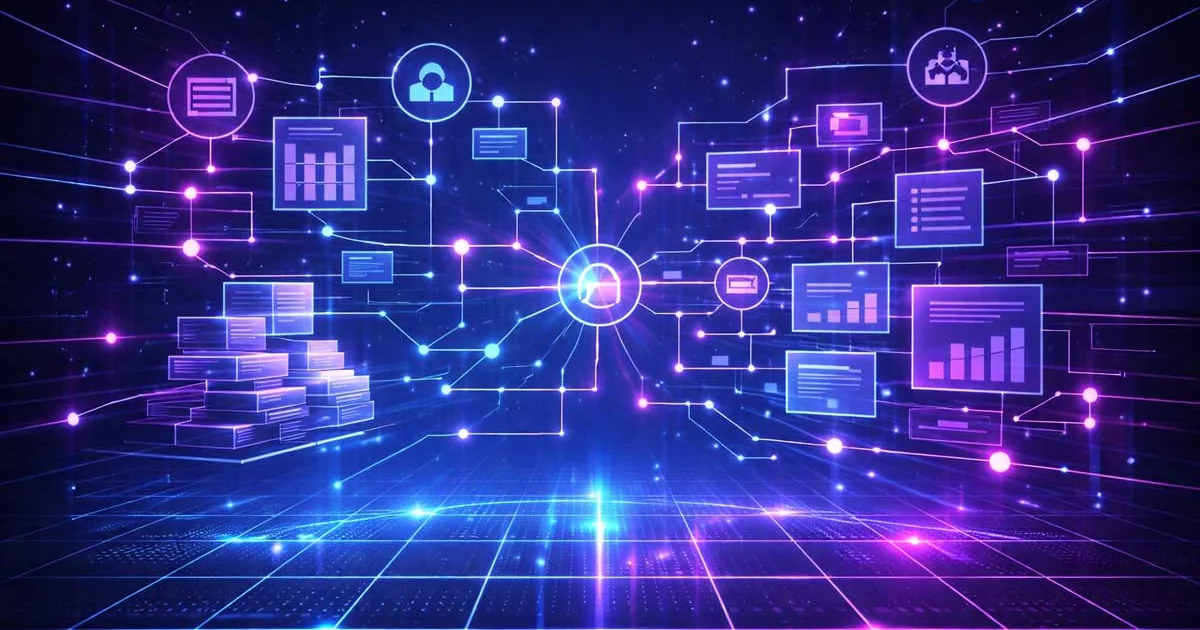
The integration bus serves as the basic element of the integration architecture, ensuring standardized message exchange between subsystems. This approach helps reduce the number of direct connections between systems and avoids complex dependencies.
IQusion IT LLC implements integration solutions using Service-Oriented Architecture (SOA) and REST interfaces. This ensures controlled request routing, data format transformation, and operation logging for subsequent auditing.
In the event of a subsystem modernization, the integration bus minimizes the impact of changes on other components, maintaining the stability of the entire platform.
Data Unification and Access Control
Unifying disparate resources requires the unification of directories, formats, and identifiers. IQusion’s practice involves creating central services for regulatory and reference information, which are synchronized with industry-specific systems.
Access control to integrated data is implemented through multi-level authorization mechanisms and encryption of information transmission channels. For state registers and legal sector systems, it is especially important to ensure the segregation of user rights according to their powers.
Event logs and centralized monitoring allow tracking all exchange operations, which increases the transparency of interdepartmental interaction.
Scalability and Platform Resilience
Integration solutions must account for the increasing number of connected systems and users. A component-based architecture allows for the gradual addition of new services without interrupting existing processes.
Redundancy of key nodes of the integration platform and load distribution ensure continuous data exchange even in the event of local failures or increased load.
In the active phase of conflict, such resilience is critical for supporting the operation of state structures and promptly responding to changes.
Architectural Approach to Phased Implementation
IQusion’s experience shows that successful integration requires a preliminary audit of existing systems and the identification of priority areas for interaction. Phased connection of resources helps avoid abrupt changes in the production environment.
IQusion IT LLC applies a systematic approach to building integration platforms, focused on long-term stability, controlled architectural evolution, and compliance with public sector security requirements.
Related materials
 Digital Transformation
Rapid Adaptation Without Stress: How HR Systems and Digital Regulations Overcome Staff Instability
This year, the Ukrainian labor market has definitively entered a phase of 'structural storm'. The demographic…
 Artificial Intelligence
Freeing up a third of staff time: which routine operations should be automated first
Ukraine's HR landscape has transformed: the shortage of specialists has become not a temporary crisis, but…
 Digital Transformation
Digital X-ray: How to Identify Bottlenecks and Delays in an Organization’s Business Processes
We all see how the rules of the game have fundamentally changed in 2026. With offices…